

Q&A with OTD Alumna: Marjorie Olgin
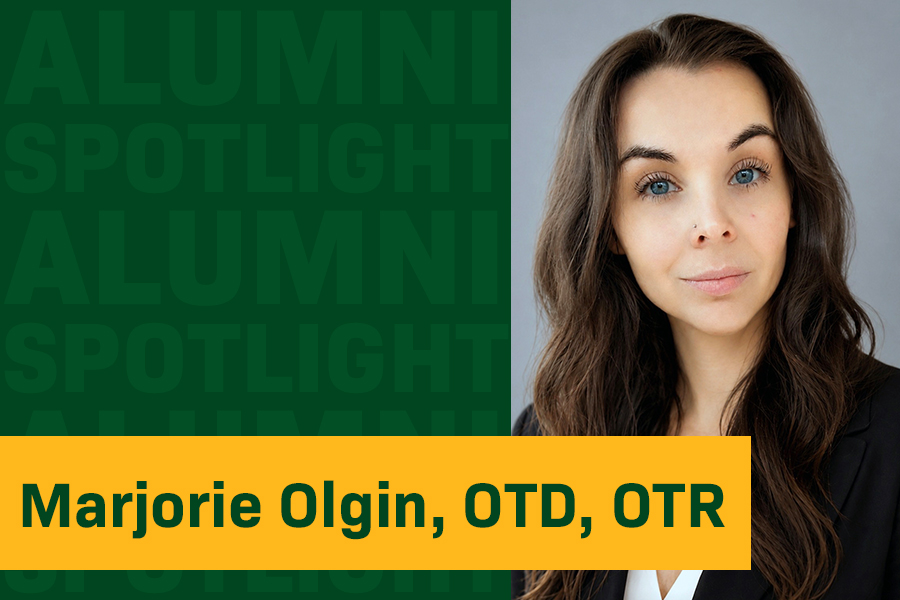
As a former Certified Occupational Therapy Assistant (COTA), Marjorie Olgin, OTD, OTR, entered Baylor University’s Entry-level Doctor of Occupational Therapy (OTD) program with a clear goal of becoming an occupational therapist. Along the way, Marjorie completed a meaningful doctoral capstone project focused on performing arts medicine, earned her degree in December 2025, welcomed a new baby, passed the National Board for Certification in Occupational Therapy (NBCOT) exam, and began her next professional chapter in outpatient hand therapy.
Her capstone project, “From Strain to Sustain: Occupational Therapy Wellness for Collegiate Keyboard Musicians,” has been accepted for presentation this summer at the Performing Arts Medicine Association Symposium. We asked Marjorie to reflect on her degree journey, the OTD capstone experience, and what comes next.
I chose Baylor because of its hybrid format. At that stage of life, I did not have the flexibility to relocate with my husband to attend a traditional program. I also appreciated that Baylor offered an accelerated program because going from two incomes to one, while pursuing this degree, meant I needed a program that would help me return to work as soon as possible. —Marjorie Olgin, OTD ’25, OTR
As a COTA, what inspired you to pursue your OTD degree?
I have had the goal of going back to school since 2018, when I started my OTA degree. I always wanted to become an occupational therapist, but when I first applied to programs, I learned that several of my prerequisite courses had expired. Rather than retaking medical terminology, anatomy and physiology, and general psychology, I chose the OTA route so I could begin working in the field.
During my time as a COTA, I worked in many different practice settings, often holding two jobs at once. I gained experience with both pediatric and adult populations. For a brief time, I considered staying a COTA, but I knew where my passion was leading me. To pursue the professional path I truly wanted, I needed to return to graduate school.
Why did you choose Baylor’s OTD program?
I chose Baylor because of its hybrid format. At that stage of life, I did not have the flexibility to relocate with my husband to attend a traditional program. I also appreciated that Baylor offered an accelerated program because going from two incomes to one, while pursuing this degree, meant I needed a program that would help me return to work as soon as possible.
Tell us about your capstone project.
My capstone is truly near and dear to my heart! I had the opportunity to work with student musicians in Baylor’s School of Music, primarily piano pedagogy students. My project focused on helping bridge the knowledge gap for musicians related to preventing overuse injuries, also known as practice-related musculoskeletal disorders.
There were so many meaningful experiences. I was able to attend piano pedagogy classes, observe private practice sessions, private lessons, and group lessons. I also had the opportunity to interview nationally and internationally touring professional musicians to learn more about their performance patterns and what they wished they had known earlier about caring for their bodies during rigorous touring schedules.
Through my review of the evidence, I found several common needs within this population, including greater understanding of anatomy and physiology, ergonomics and biomechanics, stress management and mindfulness strategies, smart practice habits, and the importance of caring for the body through exercise such as yoga, weight training, swimming, and other forms of movement. My goal was to present evidence-based information to students and provide practical tools they could use in their daily lives.
Your capstone project was accepted for presentation at the Performing Arts Medicine Association Symposium. What does this opportunity mean to you?
This opportunity means so much to me. I have a passion for music and a passion for helping others participate in meaningful occupations. Presenting at the PAMA Symposium will allow me to connect with other professionals working in this area and continue building relationships in the performing arts medicine community. I would truly love to continue working with the performing arts population.
You welcomed a baby while completing your doctoral journey. What was it like balancing motherhood, capstone, and the final stages of the program?
When I entered the final semester of the OTD program, I was at the start of my third trimester. I was very blessed that my capstone project and experience were hybrid, which helped during late-stage pregnancy. I still sometimes ask myself how I managed it all!
I relied on daily, weekly, and even monthly to-do lists to keep myself on track. I know that may sound like a lot to some people, but it helped keep me grounded. I also began preparing for the NBCOT exam while putting the final touches on my capstone project. Looking back, that was one of the best things I did for myself, although the stress was real. Working out and using mindfulness strategies also helped me stay regulated, focused, and grounded.
How did it feel to learn that you passed the NBCOT exam?
When I learned that I passed, I felt so many emotions at once. I had spent six weeks studying with a newborn. Some days I completed everything on my to-do list, and some days I barely made a dent. There were definitely moments when stress overwhelmed me and I cried.
When that happened, I would look myself in the eye in the bathroom mirror and say out loud, “I can do this. I can do hard things. I am smart and capable. I’ve got this.” I took the exam on a Friday morning in February and found out the following Thursday that I passed. In that moment, I realized how incredibly proud I was of myself. I realized how far I had come, how much I could persevere, and that I really could do hard things. I cried happy tears and took a nap.
Where are you working now, and what excites you most about this next chapter?
I am currently working in outpatient hand therapy with Athletico Physical Therapy in the Dallas-Fort Worth area, which is the same company where I completed my first fieldwork rotation. I am about to begin an internal mentorship program that will help prepare me to sit for the Certified Hand Therapist exam in about three years.
I am also excited about the possibility of continuing the work from my capstone project. We recently had an opportunity to connect with a physician at the University of North Texas who works with performing artists and has been looking for clinics to refer students to. I was able to share my capstone project, my music background, and my experience in therapy and personal training. I hope this may open the door to working with more musicians.
I am also interested in the fitness and wellness space, especially related to pregnancy and postpartum. Over the past two years, I have spent time learning more about pelvic floor function, deep core strength, and functional movement. I would love to help women feel strong in their bodies. I have a business idea in mind, so stay tuned!
What advice would you give to COTAs who may be considering returning to school to become occupational therapists?
Just do it. If it has been on your heart and mind for a while, take the leap. I know change can be scary, and “starting over” can feel daunting, but it is worth it.
The knowledge you have as a COTA will translate into the OTR role, although some things are different. Trust yourself and stay open to learning. Do not go in thinking you know everything, because no one does. Imposter syndrome when moving from COTA to OT can be very real, but again, trust yourself. Take off the COTA hat and settle into the OT hat.
One thing that helped me was having mentors I could turn to when I needed support. I would also be happy to serve as a mentor for someone else who may need a listening ear.
Inspired by Marjorie’s experience? Learn how Baylor can prepare you for a career in Occupational Therapy.