

Baylor Occupational Therapy’s Kaitlyn Cremer Joins ACT LEND as OT Discipline Coordinator
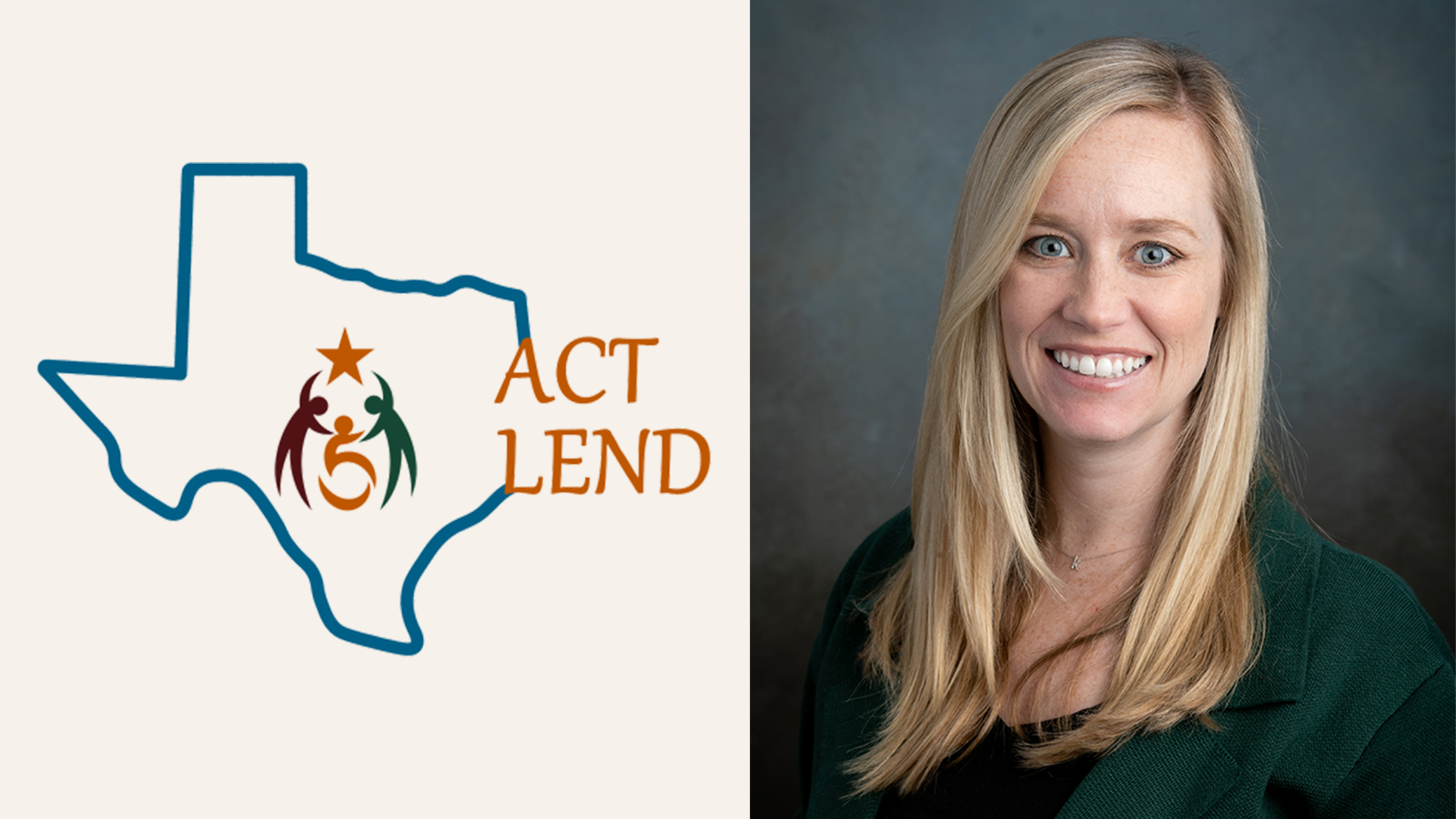
Through a $2.3 million grant from the U.S. Health Resources & Services Administration, the Baylor Center for Developmental Disabilities (BCDD), the University of Texas, and Texas State University have teamed up to offer the Autism Consortium of Texas (ACT) Leadership Education in Neurodevelopmental and Related Disabilities (LEND) program. This unique training program seeks to education cohorts of graduate students, family members, and self-advocates in culturally informed diagnosis, support, and advocacy for children with autism spectrum disorder and other developmental disabilities.
The ACT LEND faculty are experts across disciplines, including special education, speech-language pathology, social work, nursing, psychology, law, physical therapy, and more. Beginning this fall, occupational therapy will also be on the list thanks to the expertise of Kaitlyn Cremer, OTD, MOT, OTR/L, SCLV, CAPS, Clinical Associate Professor and Director of Doctoral Capstone in Baylor’s Department of Occupational Therapy.
Cremer was first introduced to the ACT LEND program during a discussion with Kristen Padilla, PhD, NCSP, LSSP, BSBA, LBA, Director of the BCDD, concerning a prospective partnership for an Entry-level Doctor of Occupational Therapy Capstone Project. As their collaboration progressed, Cremer was able to share her background and expertise with Padilla. Not long afterwards, Cremer was offered and accepted the opportunity to become the Occupational Therapy Discipline Coordinator for the program, teaching courses for ACT LEND trainees related to occupational therapy.
For the last seven years, Cremer has worked as a consultant with nonprofit organizations that serve adults with intellectual/developmental differences (I/DD), training direct support staff professionals on best practices, enhancing programming, assisting in grant acquisitions, and generally using her occupational therapist skillset to elevate services for individuals with I/DD. These are the experiences and expertise she hopes to share with the ACT LEND cohorts she instructs.
“As occupational therapists, we look at people holistically. We look at their deficits and then help them overcome those deficits—either by remediating or by teaching compensatory strategies,” Cremer shares. “We also work with groups or populations, which is a lot of what I do in my consulting work.”
Cremer notes that occupational therapists help people to become as independent as possible. Specifically for individuals with autism spectrum disorder, she highlights the impact an occupational therapist can make on sensory processing.
“Oftentimes, someone who has autism has sensory processing deficits, and so helping that person to be able to regulate all of the sensory input that comes into their body and setting up the environment for their individual needs can help them to be as independent as possible,” she says. “But then we can also train staff or caregivers to know how to best support that person. As occupational therapists, we’re looking at not just the body, but the person as a whole and how they interact in their environment.”
Cremer is excited to offer her expertise to the ACT LEND program as well as to be a part of an especially interdisciplinary and collaborative experience. Not only do the courses and faculty represent a range of disciplines, but the cohort members themselves do as well.
“The program is open to graduate students, self-advocates, and family members. An OT student might be learning right beside someone who has autism and someone who is a caregiver to an individual with Down syndrome. It’s very unique,” she explains.
Applications for the 2024-2025 ACT LEND cohort are now closed, but more information about the program can be found at disabilitystudies.utexas.edu/act-lend.
Sic ‘em, Dr. Cremer!